
Your monthly SaaS invoice recharges $400 across your research and optimization stack, and your content team still only published two articles this week because of manual formatting and linking bottlenecks. Endless keyword charts don't fix a broken publishing pipeline, which is exactly why so many teams are searching for Semrush alternatives that actually close that gap instead of just relocating the same dashboard problem to a cheaper vendor.
The frustration isn't really about the base price. It's Semrush raising a plan to $250 a month and then asking for another $100 so a freelance writer can log in and check search volume, or hitting a $299 paywall the moment you need one more competitive link gap report.
Here are 9 real Semrush alternatives, evaluated on actual pricing, usage limits, and the part most comparison posts skip entirely: whether the tool helps you publish anything or just hands you another dashboard.
Why Teams Are Searching for Semrush Alternatives in 2026
The Hidden Costs: User Seats and Modular Add-Ons. Semrush's base tier starts at $139.95/month, with Guru reaching $249.95/month, and that's before seats, which run $45 to $100 per user per month. Add technical modules like JavaScript rendering at $299/month, and a lean team can clear $500/month before producing a single published article.
One SaaS team scaling from 4 to 15 articles a month was paying $524.95/month for Semrush Guru, two extra seats, and Surfer SEO combined, before spending a single hour on the actual writing. The tool cost wasn't the bottleneck stopping them from hitting 15 articles; the manual copy-pasting between all three tools was.
Passive Analytics vs. Automated Execution: Legacy suites are diagnostic tools; they hand you tables of data and leave intent extraction, briefing, drafting, internal linking, and CMS uploads entirely to you. A dashboard showing 500 site audit warnings doesn't write, optimize, or publish a single word of content to fix any of them.
Third-party traffic estimates deserve some skepticism too. For domains under 100,000 monthly visitors, those numbers can diverge significantly from actual performance, while Google Search Console and Analytics give you exact figures for free, which makes paying a premium subscription primarily for someone else's traffic guess a questionable use of budget.
AI Overview tracking has the same problem in a different outfit. Generative search results can cut traditional organic click-through rates by 34% to 60%, but a tool that just reports the citation drop without helping you restructure content to fix it is naming a problem, not solving one.
The 9 Best Semrush Alternatives, Reviewed
Here's how each one actually stacks up, including where it still leaves work on your plate.
1. SE Ranking — Best All-in-One Suite for Agencies.
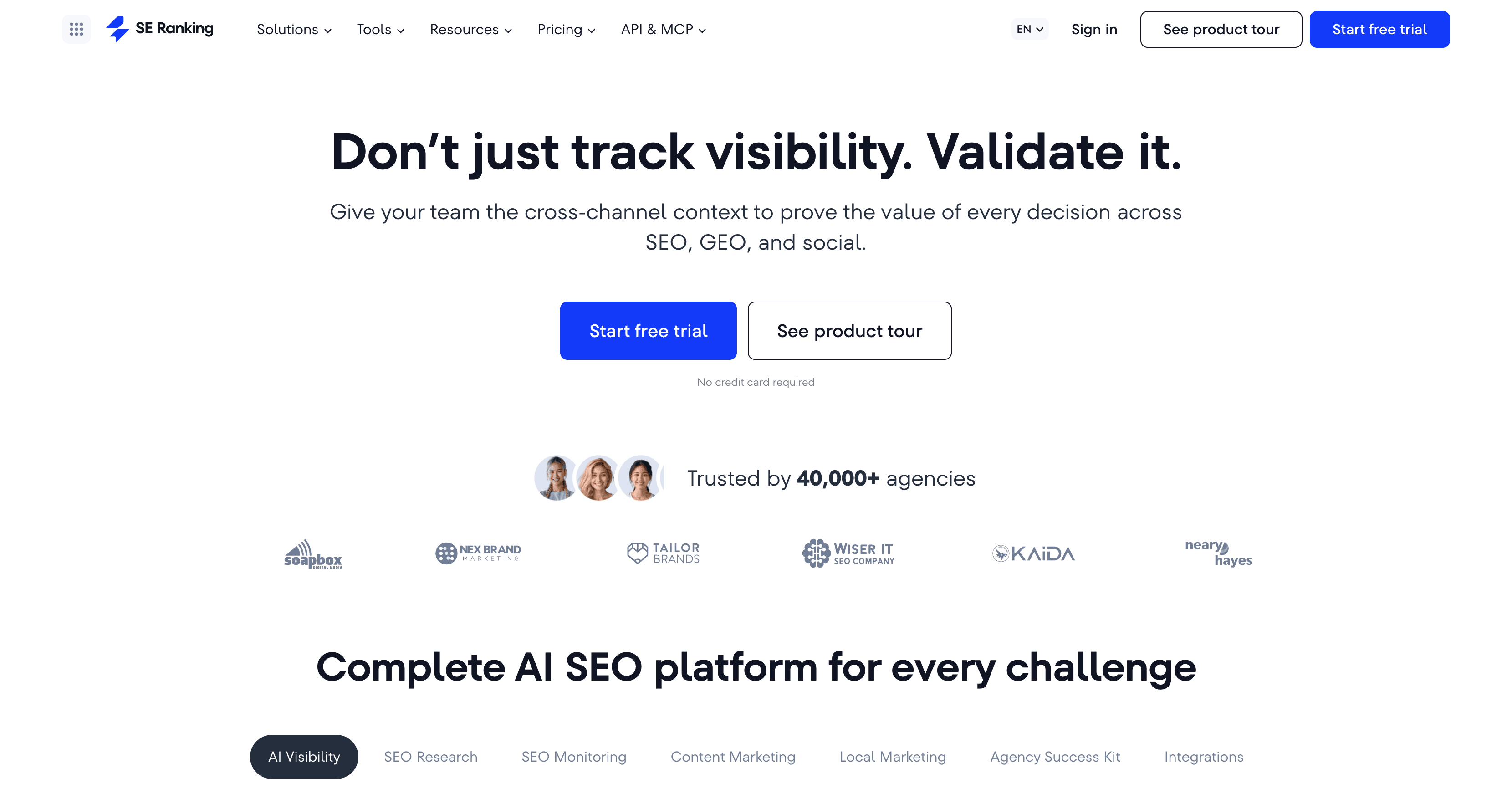 SE Ranking covers rank tracking, site auditing, and white-labeled client reporting at a noticeably lower entry price than the big enterprise suites. Trade-off: it's still a passive diagnostic tool — it doesn't touch content generation or publishing, so you're pairing it with something else regardless.
2. Ahrefs — Best for Backlink Intelligence and Link Gap Research.
 Ahrefs remains the industry standard for backlink indexes and competitive link gap analysis, and it's genuinely good at that specific job. Don't mistake it for the cheap option, though: plans run $129 to $449+/month with strict credit consumption caps, so switching from Semrush to Ahrefs usually just relocates the expense rather than solving it.
3. Mangools — Best Simplified Toolkit for Small Teams.
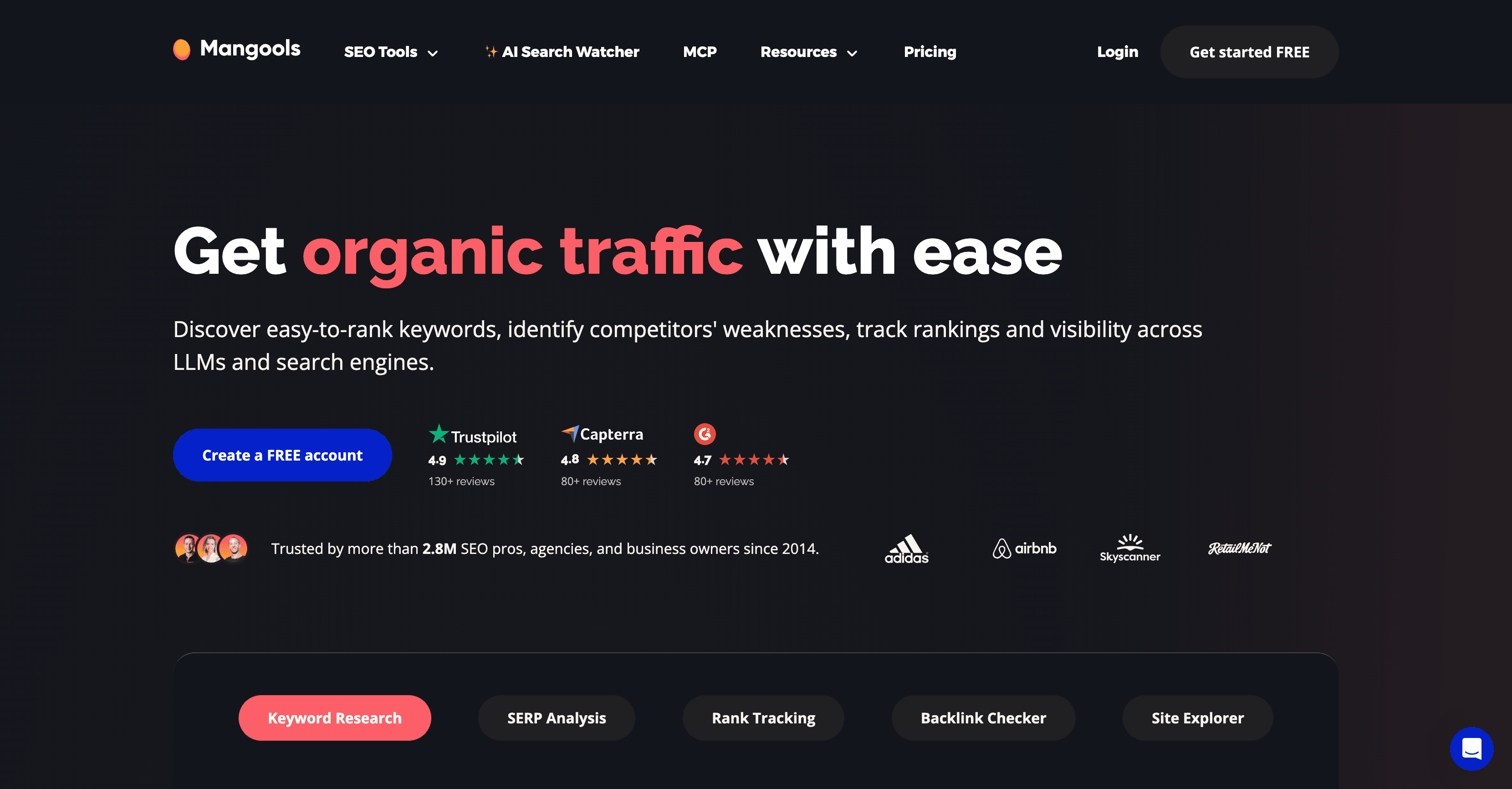 Mangools keeps the interface simple for beginners and solopreneurs who don't need enterprise depth. Trade-off: a smaller database and no advanced semantic or automation workflows once your research needs outgrow basic keyword lookups.
4. SpyFu — Best for PPC Competitor History and Ad Research.
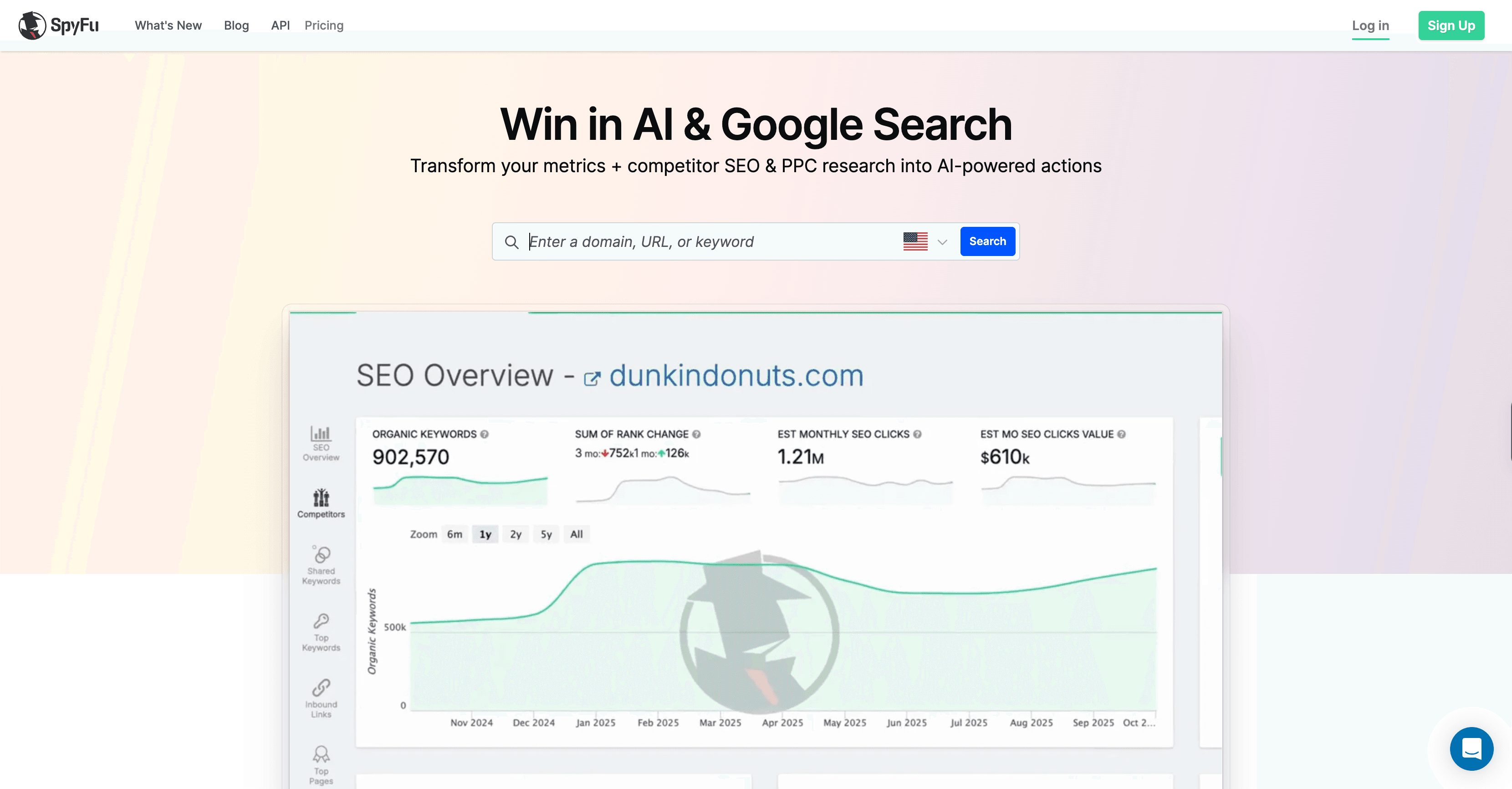 SpyFu's specialty is historical PPC and ad research — genuinely useful if competitor ad spend history and paid keyword strategy matter to your work, since it tracks changes over time that most organic-focused tools don't bother capturing. It's a narrow tool, though, not a substitute for organic research or content production of any kind.
5. Keywords Everywhere
 Keywords Everywhere is a browser extension that surfaces search volume and related terms directly in your search results is genuinely handy for quick lookups mid-research without opening a separate tool, but it is not built for deep competitive analysis or any actual content work.
6. Screaming Frog — Best Technical SEO Site Crawler
 Screaming Frog is the standard for technical crawls and site audits, catching structural issues a content-focused tool won't. It has nothing to do with content generation or publishing, so it's a technical-layer complement, not a real Semrush replacement on its own.
7. Google Search Console + GA4 — Best Essential Free Data Stack.
 It's free, and it gives you exact first-party performance data no third-party estimate can match. The trade-off is real, too: no competitor backlink tracking, no rival keyword visibility, just your own site's numbers and nothing about anyone else's.
8. Surfer SEO
 Best Specialized On-Page Content Editor Surfer scores a draft against top-ranking pages for on-page optimization. It's disconnected from keyword discovery and CMS publishing by design, so text still gets copy-pasted in and back out at a premium monthly rate for one function in a much longer pipeline.
9. SEOSorted — Best Complete AI SEO & Automated Publishing Platform.
 SEOSorted pulls live SERP data directly into drafting, injects contextual internal links automatically, and publishes straight to your CMS, without per-seat login penalties stacked on top. Unlike generic AI writers that generate generic text from static training data, it structures drafts around live SERP intent instead of guessing. Trade-off: it isn't chasing the decade-deep backlink index a dedicated link tool has built up, because topical coverage and publishing velocity matter more for most growing teams anyway.
Feature and Pricing Comparison Matrix
| Tool | Entry Price | Best For | Publishing Automation |
|---|---|---|---|
| SE Ranking | Budget-friendly | Agency reporting | None |
| Ahrefs | $129–$449+/mo | Backlink research | None |
| Mangools | Low-cost | Beginners | None |
| SpyFu | Low-cost | PPC and ad research | None |
| Keywords Everywhere | Free/low-cost | Quick lookups | None |
| Screaming Frog | Free tier + paid | Technical crawls | None |
| Google Search Console + GA4 | Free | First-party data | None |
| Surfer SEO | Mid-range | On-page scoring | None |
| SEOSorted | Unified subscription | End-to-end execution | Native |
Notice the pattern down that last column. Eight of the nine tools on this list, including some genuinely excellent ones at what they specifically do, do zero publishing automation; every one of them stops at data or drafting and hands the rest of the workflow back to you and your team.
How to Choose the Right Tool for Your Workflow
Match the tool to the actual bottleneck, not the longest feature list on the pricing page:
- If your bottleneck is client reporting at scale, SE Ranking's white-label tier solves that specifically.
- If it's backlink or link-gap depth, Ahrefs is still the standard budget for its credit caps accordingly.
- If it's technical crawl coverage, Screaming Frog fills that gap regardless of whatever else is in your stack.
- If it's the fact that research never turns into a published page, none of the above solve that. That's a publishing-pipeline problem, not a data problem, and it needs a different kind of tool entirely.
An agency managing 12 client domains ran into this from the margin side: Semrush's Business plan at $499.95/month was required just for multi-project tracking and white-label reports, and that cost kept compressing retainer margins regardless of how good the underlying diagnostic data actually was.
Common questions
Yes, combining Google Search Console with Google Keyword Planner gives you direct access to search performance, indexing data, and query volumes at no cost. This native stack won't show competitor backlink data or rival keyword visibility, but it delivers accurate performance metrics straight from Google, not a third-party estimate you have to second-guess.
Maintaining infrastructure to crawl billions of pages, index backlinks, and track daily rankings requires real computing cost, which is part of it. But enterprise platforms also layer on per-seat fees, add-on crawler upgrades, and premium reporting tiers that keep raising the bill as your team grows, whether or not your actual usage grows with it.
Not really, if lowering cost is the goal. Ahrefs plans run $129 to $449+/month with strict credit consumption caps, putting it in a similar high-cost bracket to Semrush rather than a genuinely cheaper one. Switching from one to the other usually just relocates the expense rather than solving the underlying bandwidth or budget problem.
Yes, for the operational tasks that matter most day-to-day. Modern AI platforms combine live SERP research, keyword analysis, semantic draft generation, and direct CMS publishing into one workflow, which reduces how much you need a complex, multi-tool diagnostic suite just to get research turned into a published, ranking page.
SE Ranking is the strongest pick for agencies watching client margins. It covers rank tracking, site auditing, and white-labeled reporting at a noticeably lower entry price than enterprise legacy suites, though it still requires separate content software since it doesn't handle drafting or publishing itself.
Related Reading

Content Cluster Strategy: A 4-Step Framework for Stalled Pillar Pages
Most stalled pillar pages are cluster design problems, not writing problems. This guide gives a four-step framework for intent mapping, pillar and spoke structure, and bidirectional linking, plus how to automate cluster upkeep.

Automated Keyword Research: How AI Replaces the Spreadsheet
Spreadsheets turn keyword research into cleanup work and cannibalization risk. This guide shows how AI clusters keywords by live SERP overlap, and gives a four-step framework for going from seed term to published draft.

What Does SEO Position Mean? A Practical Guide for Growth Teams
SEO position is the spot a page holds on a search results page, not the job title. This guide shows why average position misleads and how to track and improve rankings by intent, device, and location.