
When an automated AI pipeline churns out twenty targeted blog posts in a single week, search engines don't respond with traffic growth; they respond with confusion. Semantic overlap compounds faster than any manual audit can catch it, and what looks like content velocity from the outside is actually keyword cannibalization eating your own rankings from the inside.
You've probably seen the symptom even if you haven't named it: Search Console shows four URLs generating impressions for the same seed query, combined click-through rate sitting under 1%, and a blog post quietly bouncing between positions 18 and 45 for months. More content didn't cause that; untargeted content did, published without ever checking what was already ranking on the domain.
This breaks down how to tell real cannibalization from healthy multi-URL SERP coverage, the Search Console audit that actually diagnoses it, and the redirect-and-consolidate workflow that fixes it for good, not another canonical-tag Band-Aid that leaves the underlying overlap intact.
Understanding Keyword Cannibalization in Modern Search
Active Cannibalization vs. Intent-Differentiated Multi-URL Rankings: Ranking two pages for the same keyword isn't automatically a problem. Holding positions #1 and #2 with an informational explainer and a transactional tool page is dominant SERP coverage, not cannibalization; the two pages are answering different intents for the same query. Real cannibalization only exists when competing URLs serve identical intent, and the split actively depresses overall performance.
The Hidden Costs: Authority Dilution and Crawl Budget Waste. The clearest diagnostic signal isn't rank position; it's impression-and-click behavior in Search Console. When two or more URLs split impression share for the same query while bouncing unpredictably between positions 15 one week, 50 the next, that instability over a 30-to-90-day window is what confirms active cannibalization rather than normal ranking fluctuation. Every crawl spent re-evaluating which of your own pages should win a query is a crawl not spent discovering or re-indexing something that actually needs it.
Year-specific slugs create a self-inflicted version of the same problem. Publishing /best-seo-tools-2024/ next to /best-seo-tools-2025/ splits backlink equity and forces search engines to re-evaluate authority from scratch every year. A single evergreen URL that gets its copy updated in place preserves the historical signal instead of resetting it annually.
How AI Content Velocity Accelerates Semantic Keyword Overlap
Traditional cannibalization involves two pages chasing the same exact-match keyword. Generative AI has shifted the real risk to something subtler: semantic cannibalization, where multiple pages use different phrasing but answer the identical underlying question, diluting topical authority across redundant URLs that never technically "match" on keyword.
Most guides tell you more content means more rankings. That's wrong when the content isn't checked against what already exists on the domain. Standard AI generators create standalone articles from isolated prompts without ever auditing the domain's existing topic index, which is exactly how a B2B SaaS team ended up with fifteen posts targeting micro-variations of "SaaS keyword research," four of which were bouncing between positions 22 and 68 within two months, splitting impressions and producing zero trial signups. Consolidating the unique sections from three of those posts into one master guide got it to position #3 within six weeks, capturing the majority of the impressions the four separate posts had been fighting over.
Step-by-Step Audit: Diagnosing Keyword Cannibalization in Search Console
- Filter Search Console for the symptom. In the Performance report, isolate a target query and switch to the Pages tab. Multiple URLs pulling impressions and clicks simultaneously for the same query, with ranking bouncing over a 30-to-90-day window, is the signal you're looking for.
- Check SERP intent before you touch anything. Look at what's actually ranking above you. If your two URLs split the same intent as the top results, it's true overlap; if they serve genuinely different intents, the fix is re-optimization and internal linking, not deletion.
- Pick the winning URL on evidence, not opinion. Compare total backlinks, historical organic traffic, conversion rate, and exact-match keyword alignment. Unique data or subtopics from the losing page get folded into the winner before anything gets deleted.
- Redirect and re-point every internal link. 301 the losing URL to the winner, then update every internal link across the CMS that used to point at the loser; skip this and you're just adding a redirect hop instead of consolidating.
- Give it time before declaring victory. Expect 1-2 weeks of position volatility as the redirect re-indexes, then track Search Console for 4-8 weeks to confirm rank stabilization and consolidated traffic growth.
Selecting the winning URL without sacrificing historical backlinks or existing rankings is where most teams stall out. That's exactly why step 3 weighs backlinks, traffic, conversions, and keyword alignment together instead of picking based on gut feel or publish date, and it's also worth being selective about what you audit in the first place. Merging pages that split impressions on a low-value, top-of-funnel query is a poor use of engineering time; the audits that pay off target bottom-of-funnel or striking-distance keywords where a position shift actually moves revenue, not vanity traffic that was never going to convert either way.
Remediation Strategies: Merging, Redirecting, and Re-Optimizing
Why Canonical Tags Frequently Fail as Permanent Solutions: Canonical tags are a hint, not an instruction. Search engines routinely ignore them when page content substantially differs or when internal linking contradicts the tag, which is exactly why teams implement a canonical to consolidate two guide pages and then watch both URLs keep getting indexed and ranked independently anyway, sometimes for months after the tag went live. A 301 redirect is the only remediation that reliably transfers link equity and removes the duplicate from the index; save canonicals for pages that genuinely need to stay publicly accessible.
The Before/After That Actually Moves Rankings: One organic growth platform had an educational blog post, "How to Check Keyword Cannibalization," accidentally outranking its own commercial feature page for transactional queries, because external sites had linked to the blog post over time. Re-optimizing the blog post strictly for informational intent, stripping its commercial calls-to-action, and placing one contextual link with exact-match anchor text above the fold sent the feature page to position #2 for transactional queries, while the blog post held its informational rankings a cleaner outcome than deleting either page would have produced.
Preventing Cannibalization at the Planning Stage
Most existing SEO software treats this reactively, flagging overlap only after a rank tracker shows the damage. The more useful comparison is what happens before content ever gets published:
| Dimension | Traditional Approach | SeoSorted Approach |
|---|---|---|
| Detection timing | Reactive, after traffic loss | Semantic clustering before content is generated |
| Diagnostic signal | Simple keyword overlap flagging | Search Console impression-split analysis and SERP intent scoring |
| Remediation execution | Manual internal-link hunting across the CMS | Automatic detection and CMS-wide anchor re-pointing after redirect |
| AI content guardrails | Generates standalone articles with no domain check | Validates topic depth against existing URL maps before publishing |
Most tools only catch this after traffic has already dropped. SeoSorted maps keywords into semantic clusters during brief creation, using live SERP intent analysis to check new topics against your existing URL map before a draft ever gets written, so a new post either fills a real content gap or gets flagged before it competes with something you already have ranking.
When you do need to merge two pages, SeoSorted also re-points every internal link across your CMS automatically, instead of leaving that cleanup to a spreadsheet and an afternoon of manual editing, so the redirect and the internal linking update happen in the same motion rather than as two separate projects.
Common questions
Keyword cannibalization happens when multiple pages on the same site target identical search queries and user intent, splitting the authority signals that search engines would otherwise concentrate on a single URL. That internal competition shows up as ranking fluctuation, lower overall visibility, and weaker conversion performance across every page involved, not just the weaker one.
Filter the Search Console Performance report by a target query, then check the Pages tab. If multiple URLs are pulling impressions and clicks for that same query at the same time, and rankings are bouncing rather than stable, that's active cannibalization rather than normal ranking variance.
No, it's only a problem when the pages serve identical intent, and the split is actively hurting performance. Two URLs ranking for one query because they cover distinctly different intents, like an educational guide and a transactional product page, is strong SERP coverage, not cannibalization.
301 redirects are the more reliable fix, because they transfer accumulated link equity and remove the duplicate URL from the index entirely. Canonical tags are a hint search engines can ignore, and should be reserved for cases where both versions of a page genuinely need to stay publicly accessible.
AI writing tools make it easy to publish large volumes of content fast, which accelerates overlapping topical structures if nothing checks new drafts against what already exists on the domain. Without upfront semantic keyword mapping first, AI content generation scatters authority across redundant, competing URLs instead of building it up on a single asset.
Related Reading

Content Cluster Strategy: A 4-Step Framework for Stalled Pillar Pages
Most stalled pillar pages are cluster design problems, not writing problems. This guide gives a four-step framework for intent mapping, pillar and spoke structure, and bidirectional linking, plus how to automate cluster upkeep.
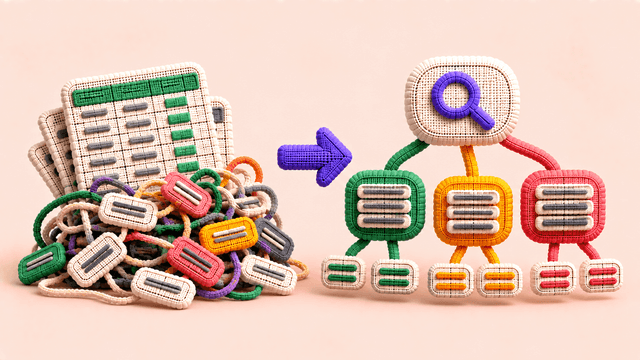
Automated Keyword Research: How AI Replaces the Spreadsheet
Spreadsheets turn keyword research into cleanup work and cannibalization risk. This guide shows how AI clusters keywords by live SERP overlap, and gives a four-step framework for going from seed term to published draft.

What Does SEO Position Mean? A Practical Guide for Growth Teams
SEO position is the spot a page holds on a search results page, not the job title. This guide shows why average position misleads and how to track and improve rankings by intent, device, and location.