Framer SEO, minus the manual field-filling
Publish SEO-optimized articles straight to your Framer CMS. SEO Sorted researches, writes, and publishes SEO-ready articles directly into your site with your content, meta fields, images, and other mapped fields already filled in.
SETUP TIME
~2 minutes
SYNC
One-way, auto publish
AUTH
API Token / Credential
AVAILABLE ON
Free & Pro plans
Connect Framer with SEO Sorted in minutes
No copy-pasting, no manually filling CMS fields by hand.
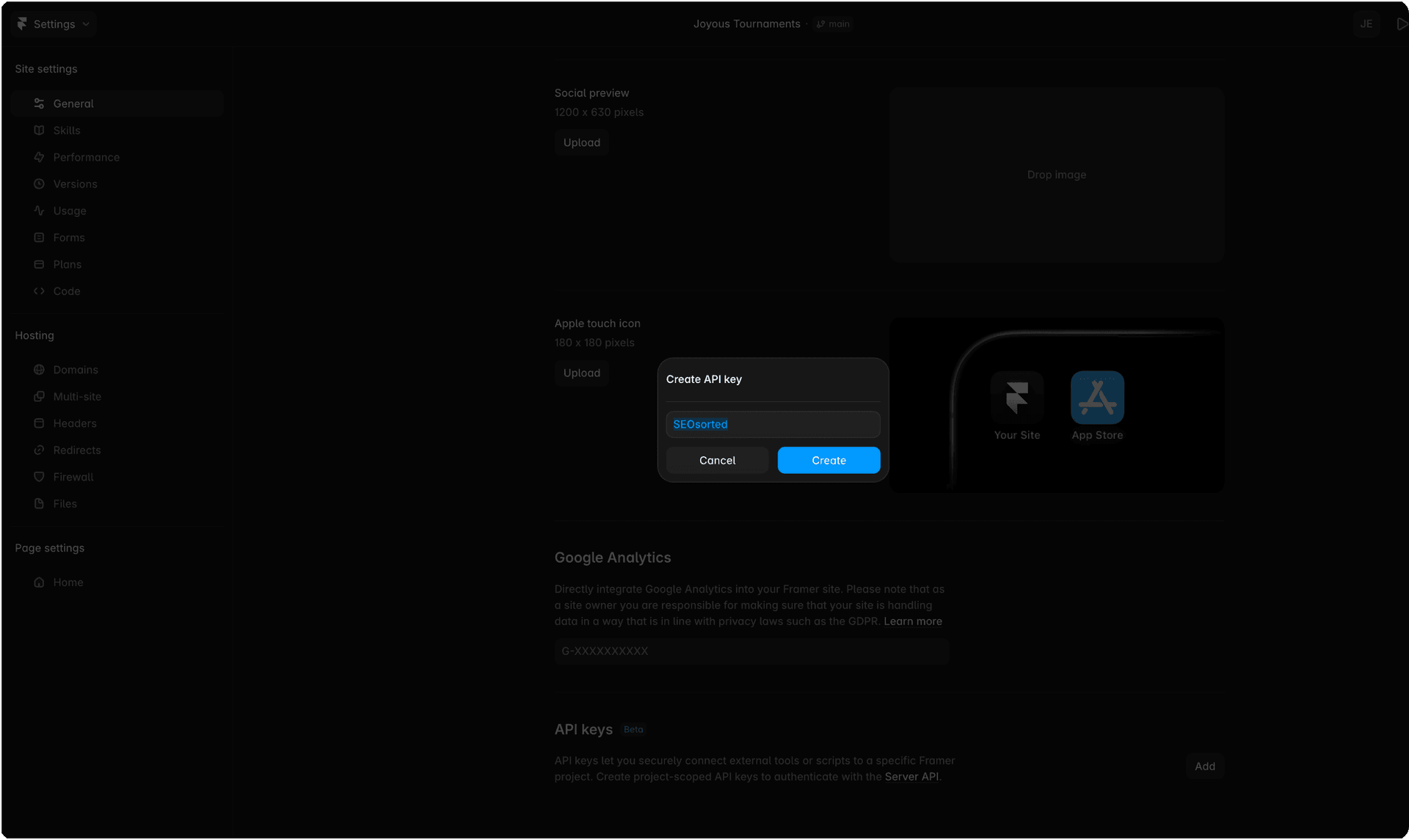
Generate Your Framer API Key
Open your Framer project, go to Settings → General → API Keys, and generate an API key to securely connect your site. Need help? View the setup guide
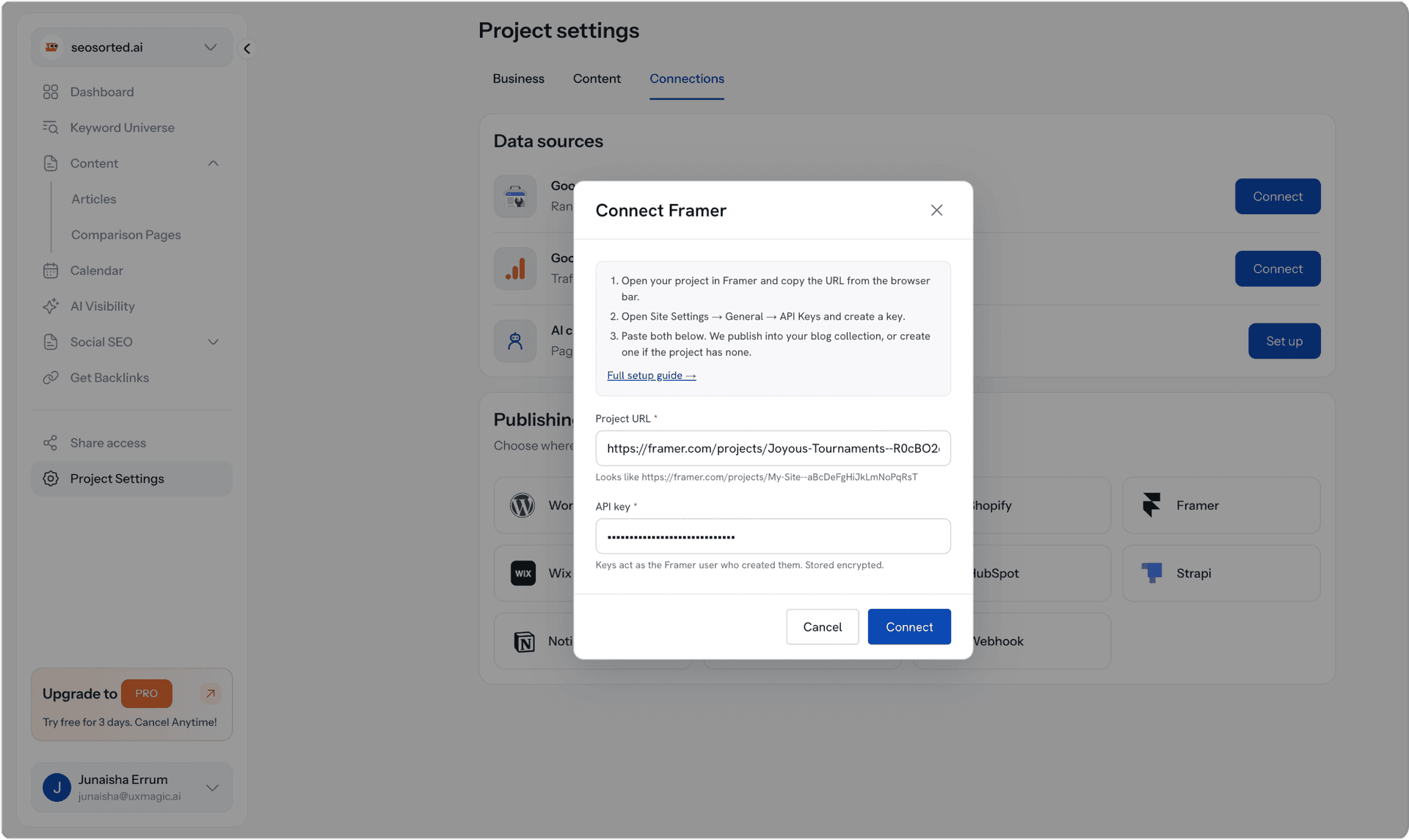
Connect Your Framer Site
Go to Project Settings → Integrations → Framer in SEO Sorted. Enter your project URL and API key to connect your site.
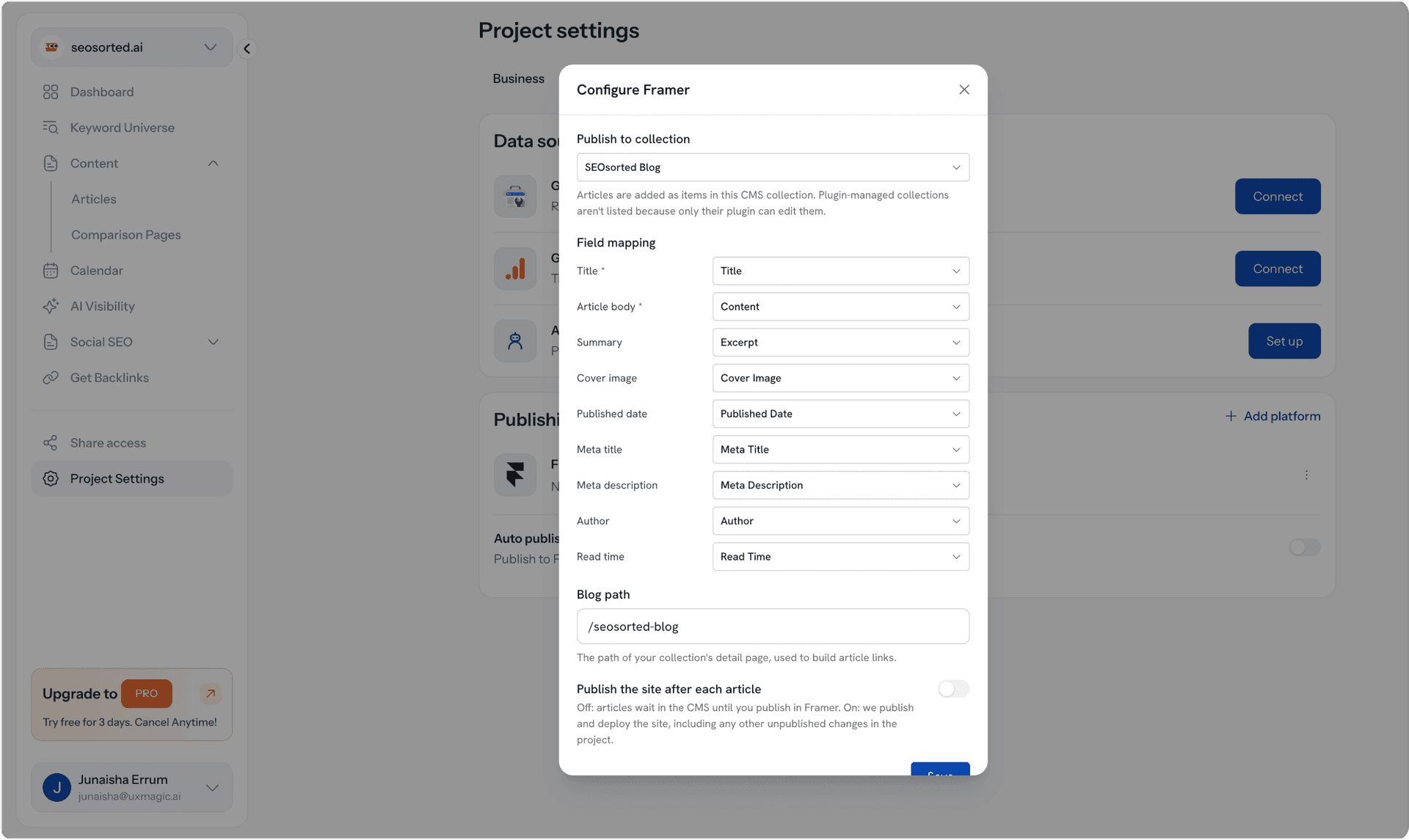
Configure Your Framer CMS Fields
SEO Sorted automatically detects and maps your blog collection when possible. Otherwise, choose your CMS collection and map the required fields.
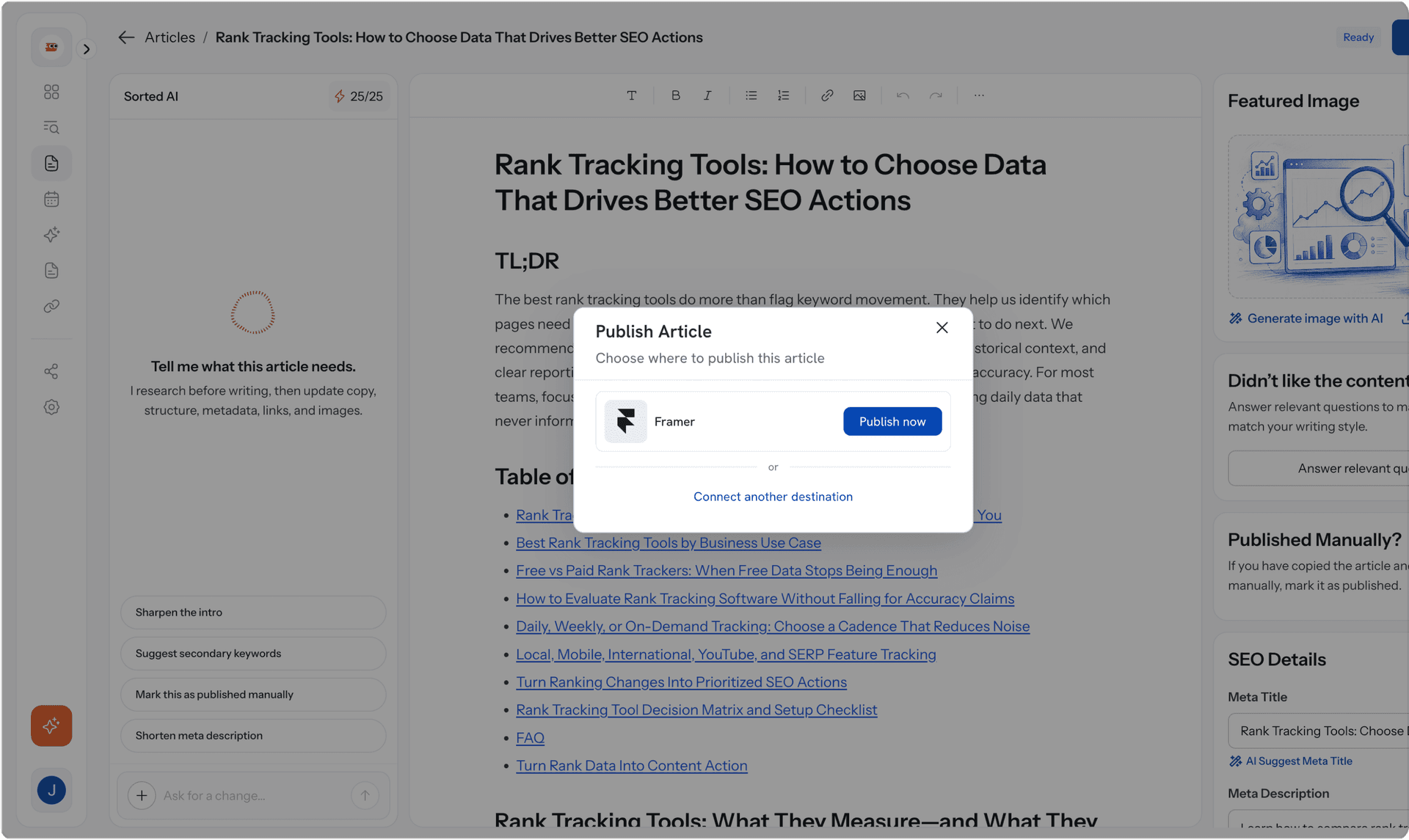
Articles start publishing automatically
Each article arrives fully formatted, with SEO fields and images ready saved for your review or published automatically when you're ready.
Why Framer teams choose SEO Sorted

No CMS fields left half-filled
Manage SEO content in Framer without manually filling titles, meta descriptions, slugs, images, and other fields. SEO Sorted keeps your CMS content complete and consistent as you publish.

Built for teams managing Framer sites
Running content across multiple Framer projects? SEO Sorted gives you one workflow for every site from research and writing to review and publishing.

Works with your existing Framer setup
No need to rebuild your CMS or change how your site is structured. Connect your existing Framer collection, map your fields, and SEO Sorted publishes into the setup you already use.
Thinking about hiring a Framer SEO agency instead?
An SEO agency or freelance expert can audit your site, plan your strategy, and tell you what needs improving. SEO Sorted handles the ongoing execution researching keywords, writing articles, and publishing them directly to Framer. Use both if you want: SEO Sorted keeps the content pipeline running while your experts focus on strategy.
Common questions

Connect your Framer site once and SEO Sorted can send your generated articles directly to your Framer CMS. Your content, SEO fields, images, and formatting are handled as part of the publishing flow, so you don't have to manually copy and paste every article.
Yes. Once your Framer site and CMS collection are connected, you can publish SEO Sorted articles directly to your Framer CMS. That means you can go from keyword research and content generation to a published article without switching between tools.
Yes. Framer gives you control over important SEO elements like page titles, meta descriptions, URLs, and headings. The gap isn't the platform it's consistently researching, creating, optimizing, and publishing content. That's the part SEO Sorted automates.
Mostly, yes. Framer provides fast-performing sites and built-in controls for essential SEO settings. What it doesn't do automatically is the keyword research, content writing, or keeping your CMS populated with optimized content at scale. SEO Sorted handles that layer.
Not necessarily, it replaces much of the ongoing content production work. Agencies and freelancers are often focused on strategy, technical SEO, and audits; SEO Sorted is the system that keeps researching, creating, and publishing optimized content between those engagements, for a fraction of a retainer.
No. The integration is designed to be straightforward, so you don't need to write code or manually manage the publishing workflow. Once your Framer site and CMS are connected, SEO Sorted handles publishing your content into the right fields for you.
Other integrations

Bing Webmaster Tools
Tracks indexing status and search performance on Bing/Copilot search alongside Google, so you're not flying blind on the second-largest search engine.

Ghost
Publish seamlessly to your Ghost publication.

Google Analytics 4
Pulls session and conversion data per article, so you can see which published pieces actually drive traffic and signups — not just rankings.